
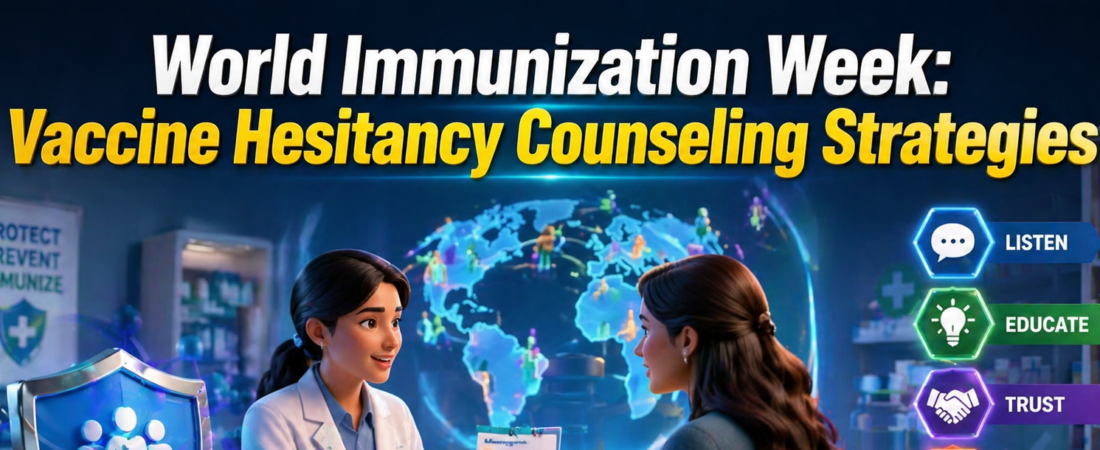
Introduction to Vaccine Hesitancy Counseling Strategies
World Immunization Week vaccine hesitancy counseling strategies are essential in modern healthcare to improve vaccination uptake and combat misinformation. Vaccine hesitancy remains a major global challenge, affecting public health outcomes and increasing the risk of preventable diseases.
Pharmacists and healthcare professionals play a critical role in addressing patient concerns, building trust, and promoting immunization through effective counseling techniques.
What Is Vaccine Hesitancy?
Vaccine hesitancy refers to delay in acceptance or refusal of vaccines despite availability of vaccination services.
- Influenced by misinformation and myths
- Concerns about safety and side effects
- Lack of trust in healthcare systems
- Cultural and religious beliefs
Importance of World Immunization Week
World Immunization Week is a global initiative aimed at promoting the use of vaccines to protect people of all ages against diseases.
- Raises awareness about vaccine-preventable diseases
- Encourages global immunization efforts
- Highlights the role of healthcare professionals
- Promotes equitable access to vaccines
Role of Pharmacists in Addressing Vaccine Hesitancy
Pharmacists are highly accessible healthcare professionals and play a key role in patient education and immunization advocacy.
- Provide evidence-based information
- Address patient concerns and misconceptions
- Encourage informed decision-making
- Support public health initiatives
Key Vaccine Hesitancy Counseling Strategies
1. Build Trust and Rapport
- Listen actively to patient concerns
- Show empathy and respect
- Avoid judgmental language
2. Use Clear and Simple Communication
- Avoid medical jargon
- Explain benefits and risks clearly
- Use relatable examples
3. Address Myths and Misconceptions
- Correct false information with scientific evidence
- Clarify common myths about vaccine safety
- Provide reliable sources
4. Personalize the Message
- Relate vaccination to patient’s health condition
- Explain individual benefits
- Highlight risk of non-vaccination
5. Use Motivational Interviewing
- Ask open-ended questions
- Encourage patient participation
- Guide rather than force decisions
Common Barriers to Vaccination
- Fear of side effects
- Lack of awareness
- Accessibility issues
- Social media misinformation
Strategies to Improve Vaccine Acceptance
- Provide consistent and accurate information
- Strengthen patient-provider communication
- Promote community awareness programs
- Utilize digital health platforms for education
Comparison: Vaccine Hesitancy vs Vaccine Acceptance
| Parameter | Vaccine Hesitancy | Vaccine Acceptance |
|---|---|---|
| Knowledge Level | Low or Misinformed | Well-informed |
| Attitude | Fearful or Doubtful | Confident |
| Decision Making | Delayed or Refusal | Timely Acceptance |
| Health Outcome | Higher Disease Risk | Disease Prevention |
Future Directions in Vaccine Counseling
- Integration of digital tools and AI-based education
- Stronger public health campaigns
- Improved healthcare communication training
- Global collaboration for immunization programs
Conclusion
World Immunization Week vaccine hesitancy counseling strategies are vital for improving vaccine uptake and ensuring public health safety. Pharmacists and healthcare professionals must adopt patient-centered communication, address misinformation, and build trust to overcome vaccine hesitancy effectively.